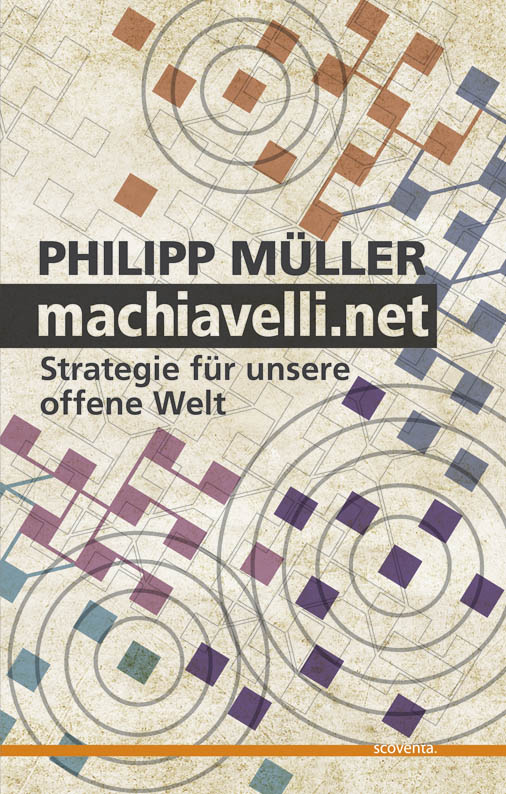
The Long Telegram of the 21st Century

There are not many instances when a governmental memo shaped the political philosophy of a generation. Clearly Kennan’s Long Telegram comes to mind:

The ‘Long Telegram’ was sent by George Kennan from the United States Embassy in Moscow to Washington, where it was received on February 22nd 1946. The telegram was prompted by US enquiries about Soviet behaviour, especially with regards to their refusal to join the newly created World Bank and International Monetary Fund. In his text, Kennan outlined Soviet belief and practice and proposed the policy of ‘containment‘, making the Telegram a key document in the history of the Cold War. The name ‘long’ derives from the telegram’s 8000 word length. (quote from About.com)

The social media community believes Obama’s Transparency/Participation/Collaboration memo will have a similar impact on our century. The framework implied in the memo has been taken up governments worldwide, real world policies have been implemented, and the “access-to-information-legislation” topic has moved from arcane to center field. It is surprising, however, that not much is known about the background/history of the memo. Who drafted it? Who developed the TPC framework? Who brought the topic onto the agenda? Who knows more? Who can point me to the relevant people?


Network Society and the Futures of Modernity

I just spent the day at the Futures of Modernity Symposium in Munich, held in honor of Ulrich Beck, the grand sociologist and author of Risk Society (1992). The idea of the event was:

Throughout the world, contemporary societies are facing the challenges posed by a set of heterogeneous phenomena of social change which are not only placing existing convictions and interpretations in question, but are already creating new and multiple realities that escape the established categories of thought. The emerging outlines of a Cosmopolitan World Risk Society cannot be grasped in terms yesterday’s sociology which takes its orientation from industrial society in the nation-state and from the exclusiveness of European (i.e. Western) modernity. Nevertheless, the multitude of social phenomena which point to epochal transitions towards a new future open up novel horizons of critical analysis and discussion and pose a range of pressing questions that must be addressed today if we are to be ready for the challenges of tomorrow.

It was a great event, however, I was shocked that nobody spoke about the emancipatory potential or the totalitarian dangers of new forms of technologically mediated ideation, deliberation, and collaboration. New forms of collective action such as peer production, crowd-sourcing, and networked governance were completely ignored, as if all that had happened recently was the 40th anniversary of the landing on the moon and the 20th of the fall of the Berlin Wall. What about Twitter, the opening of the Facebook stream APIs, or the Open Government Initiative? :)

Ulrich Beck’s main thesis is that we live in a second modernity. Modernity for Beck is the move to instrumental rationality (ends-means rationality) as the main mode of thinking. This means during modernity (roughly 17th to the end of the 20th century) the aim was to control nature and human institutions to reduce risks to our societies.

Second modernity develops when we realize that we cannot control all risks because the complexity of institutions we created to control risks, states, the financial markets, insurance companies, nuclear energy, or genetic engineering, themselves create new uncontrollable and global risks.

Beck states that in second modernity we have left modernity, but cannot go back to premodern forms: all flavors of fundamentalisms (Christian, Islamic, or other) are modern responses to the challenges of our age not premodern uprisings. He also warns that post-modernity neither gives substantive answers to the challenges that risks confront us with, nor to the inequalities of our worlds. This means we are effectively living in a Gramscian interregnum.

This framework of risk society allows us to describe all types of phenomena from the injustice of the subcontracting in the global supply chain to the risk propensity of Wall Street bankers that show no remorse about their actions, explaing responsibility away by calling it “systemic failure.” Because these human manufactured uncertainties are of planetary nature, Beck calls for cosmopolitan Realpolitik as a response to the challenges of second modernity. He asks, how can national states re-conquer a state-political meta power vis-à-vis those economic actors – in order to force a cosmopolitical regime upon world-political capital that includes political freedom, global justice, social security, and ecological sustainability?

And here is where I would want to disagree. It is not by re-awakening early modern zombies that will save the planet.

The emancipatory power of concepts like radical transparency, open collaboration, and network governance stems from an emerging new paradigm in social theory. Unfortunately, at this point there is no enough political philosophy or social theory discussion on this important topic, which will probably shape human societies for the next 300 years.

Clearly, it is time to collaborate on this “beyond modern” planetary political theory and public policy project!


Discussing the IDC Framework: Ideation, Deliberation, and Collaboration

as we are learning to use social media in organizations, we overestimate some aspects of this new approach and are confused about others: What is new, what is not? What is hype, what is real? Therefore, it is a time for careful definitional work. Yesterday, Andy Blumenthal, the CIO of the FBI did this in an article in Government Technology where he outlined the difference between communication and collaboration:

Information technology has traditionally been about “communication” of information — capturing it, processing it, moving it, storing it, finding it and using it. But now, with Web 2.0, we have evolved from communication to “collaboration.” Well, what’s the difference?

…the real difference between communication and collaboration seems to be related to an organizational and cultural transformation taking place…

We’ve always communicated. But much of the communication was within our own stovepipes — particularly within our own chain of command — to our bosses, staffs or peers primarily within the same organizational function. That was where most of our communication took place — in our organizational verticals.

Now, however, we are transforming from mainly vertical communication to the horizontal collaboration. We are breaking down the stovepipes, which one of my colleagues euphemistically calls “silos of excellence,” and we are instead working across organizational and functional boundaries — hence, we are doing some genuine collaboration!

This is a useful conversation starter and it reminds us of that we are still only learning to “collaborate.” I want to distinguish between three modes of technology-enabled collaboration: Ideation, deliberation, and collaboration, what I refer to at the ESPP as the IDC framework.

All three are useful to governments (and business) when confronted with specific policy issues. Often but not always, you might start out with an ideation phase, move to a deliberation phase, and then to collaboration, the classical example is the Open Government Initiative. Of course, collaboration and deliberation is part of ideation and vice versa, but on the project level, they can be clearly distinguished.

Ideation

ideation is the process of collectively coming up with ideas and developing them. What is need is a platform that allows participants to post ideas, to comment, and to weed out the bad apples.

Deliberation

we understand deliberation best, because it has its analog in the offline world and there is sufficient text about it (Aristotle, Habermas, Sunstein come to mind). The idea is to create a space in which the better argument and not the structurally advantaged position wins. What is needed is a platform to present ideas, discuss them both syn- and diachronically, and to weigh them in concordance with the underlying governance principle (think Digg-style, Reddit-style, or IMDB-style).

Collaboration

we have most difficulties with collaboration, because it is new. Collaboration allows access to the work-flow by self-selected outsiders. The idea is to make the work flow modular, granular, and redundant, so that very different contributions can be integrated without endangering the quality of the output. A collaboration platform must be governed by a combination of self-enforcing code, simple but strong core principles, and an inclusive culture (think Canonical’s Launchpad or Wikipedia).

What do you think? What would a full-fledged framework look like? Is it mutually exclusive and collectively exhaustive (MECE)?


Structuring Deliberation 2.0

Whenever I have talked to government officials in 2009 (in Cancun, Erfurt, Vienna, Salzburg, or Washington DC), at some point in the conversation they mention that “we need to develop new modes of interacting with citizens.” Implicit in this argument is a frustration with the fairly artificial tool set they have at their disposal.

Government as a Contract Society institution wants to insure the legality of its operations at all times, therefore, it is very careful in its communication: “if you really need an answer, please do not send an email, letters are better integrated into our (electronic) work-flow.” But network society logic (outcome orientation, eternal beta, radical transparency) have a way of sneaking up onto us.

In 2009, there is a clear realization that “things will be messy, but this is necessary (and not as dangerous as we think).” And everybody (and their grandmother) is scrambling to set up platforms to “ideate,” “deliberate,” and “collaborate.” On Wednesday, for example, we will discuss the participatory budgeting platform for the city of Erfurt.

The Obama adminstration has just gone through the first two months of the Open Government Initiative and there are interesting first lessons. And because online interaction is still so new, we are developing our sensitivity for deliberation 2.0. Here are some takeaways from Beth Noveck, in a recent NYTimes article:

  • If you don’t frame the debate, if you don’t ask a good question, you don’t get a good answer to the question.
  • If people are going to be asked to spend the time on contributing, you want to use the participation they give you.
  • If you run a dialog over weeks and weeks, you cannot begin to use the inputs you are given [there will be too many].
  • Government must also create a culture that is in some ways more formal than much of the rest of the Web. On sites like Slashdot, she said, the most popular posts are “the funniestor the snarkiest.” But that’s not an appropriate standard when trying to debate policy.
  • There is a reason you want people with expertise working in the jobs we have,(..) but the new online tools will nonetheless put pressure on officials to take public opinion into account.
  • Even something like having a blog with an open discussion about policy is revolutionary in the way government works.
  • In addition to the public brainstorming session, she ran another online discussion for government officials. This was unusual in that it asked for ideas from people at every level of government, speaking on their own. That’s very different from the usual structure in which feedback on ideas posed by one agency is funneled up through the chain of command at other agencies.

Beth Noveck

As we are preparing for the Erfurt Sessions, what are your takeaways from deliberation projects you have been involved in? What projects worked? Which did not? Why?


“…It is not deliberation!”

In the following video Beth Noveck outlines her vision for a world where public value is created by self-selected experts collaborating on platforms that mirror the collaboration process back to the participants:

LInk

This is new political theory, counter-intuitive from a Habermasian deliberative democracy perspective. It shows that it makes sense to “listen carefully” to technology.


World 2.0: Twitter Governance [Conditions of Possibility]

What makes technologically mediated social interactions different? What are the conditions of possibility of networked governance?

The Technology Principle: Network Society is mediated through technology. Corollaries:

  • The Path Dependency Principle: Path dependency makes it costly for us to exercise choice and leave any given network.
  • The Scale and Network Effects Principle: Network effects are the glue of network society.
  • The Critical Mass Principle: Some things only work when a critical mass is present.
  • The Modularity Principle: Modularity allows complexity by combining simple parts.
  • The Granularity Principle: The smaller the useful contribution, the easier the scalability.

The Social Principle: Any network participant chooses to participate or to leave at any point in time. Corollaries:

  • The Consensus Principle: Decisions in choice-communities are made by consensus (not unanimity…and forking is allowed)‏.
  • The Outcome Legitimacy Principle: The legitimacy of a policy that aims to create public value is derived from the public value created (as defined by its stakeholders choice to stay-or-leave).
  • ‏The Peer Collaboration Principle: Commons are produced by peers, for peers.
  • The Transparency Principle: Transparency takes the role of democracy as the standard which any governance situation is evaluated against, this necessitates documentation (transparency through time).
  • The Reflexivity Principle: any decision-making situation can be reflected at all times (this is what Beth Noveck calls visual deliberation).

Anything I am missing? What types of governance does such a world allow? What are the limits and possibilities of networked governance?


Beyond Competitive Strategy

For 30 years competitive strategy (the five forces, portfolio analysis, learning, new market development, blue oceans) has determined how we think strategy. Competitive strategy was built on the 19th Century Prussian military understanding that business could be described through strategic interaction of rational players in environments that stay relatively stable over time (stasis in Heraclitian terms).

The world has changed. Today’s strategic environments are determined by complexity, post-human intelligence, networks, fuzzy boundaries, communicative rationality: flux, as Heraclitus would say. Web 2.0 is the shortcut for web-technologies (xml, self-publishing, collaboration platforms, social networking) that once intertwined transform economic production, society, and public governance. However, this change did not start in 2006. Over the last 30 years, we can observe a move from production (defining the value chain), to co-production (manging the supply chain), to peer production (enabling user-generated outputs). This means that strategy in business changes from competitive strategy to communicative strategy. This is big. The closest historical analogy, to this radical transformation of collective production is the emergence of print capitalism in the 16th and 17th Century.

What will post-competive strategy look like? What are the core strategic ideas of network society? What does strategy advice look like in such a world? Who will be the strategy gurus of tomorrow?


Open Government and the TPC Framework

About 10 days ago, Barak Obama published the following memo. It is a must-read. His TPC Framework (transparency, participation, collaboration) reminds us that the three need to play together if we want to make networked governance work.

MEMORANDUM FOR THE HEADS OF EXECUTIVE DEPARTMENTS AND AGENCIES

SUBJECT:      Transparency and Open Government
My Administration is committed to creating an unprecedented level of openness in Government.  We will work together to ensure the public trust and establish a system of transparency, public participation, and collaboration. Openness will strengthen our democracy and promote efficiency and effectiveness in Government.
Government should be transparent.  Transparency promotes accountability and provides information for citizens about what their Government is doing.  Information maintained by the Federal Government is a national asset. My Administration will take appropriate action, consistent with law and policy, to disclose information rapidly in forms that the public can readily find and use. Executive departments and agencies should harness new technologies to put information about their operations and decisions online and readily available to the public. Executive departments and agencies should also solicit public feedback to identify information of greatest use to the public.
Government should be participatory. Public engagement enhances the Government’s effectiveness and improves the quality of its decisions. Knowledge is widely dispersed in society, and public officials benefit from having access to that dispersed knowledge. Executive departments and agencies should offer Americans increased opportunities to participate in policymaking and to provide their Government with the benefits of their collective expertise and information. Executive departments and agencies should also solicit public input on how we can increase and improve opportunities for public participation in Government.
Government should be collaborative.  Collaboration actively engages Americans in the work of their Government. Executive departments and agencies should use innovative tools, methods, and systems to cooperate among themselves, across all levels of Government, and with nonprofit organizations, businesses, and individuals in the private sector.  Executive departments and agencies should solicit public feedback to assess and improve their level of collaboration and to identify new opportunities for cooperation.
I direct the Chief Technology Officer, in coordination with the Director of the Office of Management and Budget (OMB) and the Administrator of General Services, to coordinate the development by appropriate executive departments and agencies, within 120 days, of recommendations for an Open Government Directive, to be issued by the Director of OMB, that instructs executive departments and agencies to take specific actions implementing the principles set forth in this memorandum. The independent agencies should comply with the Open Government Directive.
This memorandum is not intended to, and does not, create any right or benefit, substantive or procedural, enforceable at law or in equity by a party against the United States, its departments, agencies, or entities, its officers, employees, or agents, or any other person.
This memorandum shall be published in the Federal Register.
BARACK OBAMA